
The sprint blood of Leo Heremans via, among others, 'Olympic Sperwer', 'Gilbert', and 'De Jan' forms the foundation of this colony which can even peak up to 700km! Super-fast pigeons with endurance, that's what we are all looking for, right?!
90% Heremans
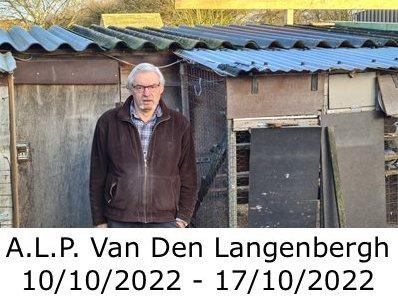
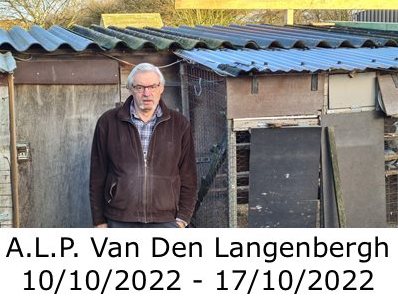
Peter Van den Langenbergh (52) caught the pigeon racing bug in 1986 through a colleague pigeon enthusiast. Soon after, father Alfons got involved, and mother also joined in their pigeon adventure. While the initial focus was on pure sprint racing, the shift gradually moved towards both the small and large middle distance.
Due to his job as a caretaker at master Leo Heremans (Vorselaar), Peter had the opportunity a few years ago to bring the quality of this speed virtuoso into his own loft. Eggs and young birds were frequently moved to Rijkevorsel, where Peter’s father Alfons and mother Louisa ('Wiske') took care of most of the nurturing. The entire basis of the Van den Langenbergh loft still consists of 90% Heremans pigeons. Over the years, pigeons from Lambrechts-Lismont, Johan De Belser, Gebr Herbots, Wim Storms, and Bart Verbeek were also added.
The breeding loft currently consists of 25 breeding pairs. They are paired at the end of November, and about 50 young pigeons from the first round and around 30 from the second round are weaned. The youngsters are not darkened or artificially illuminated, and motivation is quite simple through both nest play and the sliding door system.
Peter: “When the young birds fly well away, preferably after about 40 minutes, they are taken away from 6km to Duffel. After that, they go into the basket for Brussels and then to Quiévrain to start on the middle distance.”
With 10 widowers on classic widowhood and 25 flying hens, flights for old and yearlings are started. They are also paired during the winter with the breeding pigeons. Throughout the sports season, a few cocks are added for motivation alongside the flying hens that are standardly played from the aviary. The training of old and yearling racing pigeons occurs as soon as the weather permits, and from April they are prepared with a few sprint flights before moving on to the middle distance and even small distance.
Care
The garden lofts and the loft above the garage provide space for 3 sections of young pigeons, 2 lofts for widowers, a breeding loft, and an outdoor run for the flying hens.
For feed mixes, 'breeding vital Quatro', 'super diet', and 'purification Basic Line' from Van Tilburg are used. Beyers’ breeding mix is also given. The racing pigeons receive a finely measured amount of feed, which is determined based on the distance to be flown over the weekend. Along with this feed, by-products such as brewer's yeast, red stone, vitamin-mineral, garlic oil, and cod liver oil are regularly added, according to the system of Leo Heremans.
On the medical side, Alfons and Peter visit different veterinarians since their regular vet is now retired. Vaccination for paramyxo usually occurs in February-March and for the young pigeons when they are just weaned, with a repeat a few weeks later.