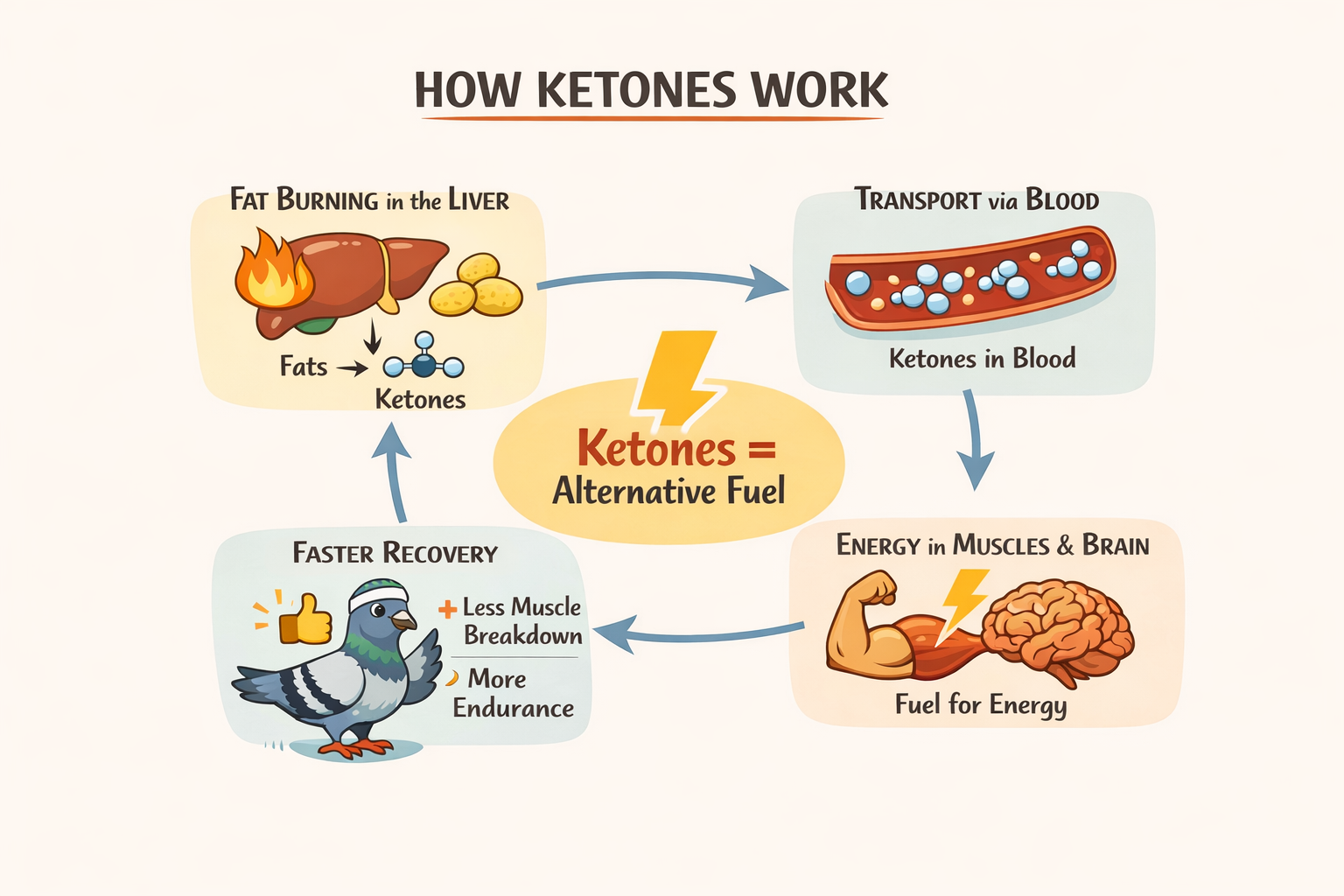


Ketones—also called ketone bodies—are small energy molecules produced in the body from fats when glucose availability is limited or when energy demand is very high. The main ketone bodies are acetoacetate, β-hydroxybutyrate, and acetone. They are formed in the liver through a process called ketogenesis, in which fatty acids are broken down into usable energy units. Ketones are therefore a natural and efficient alternative fuel used by the body during fasting, prolonged exercise, illness, or other situations in which energy demand is high.
When ketones enter the bloodstream, they can be used by almost all organs, including the brain, heart, and muscles. Inside cells they are converted into acetyl-CoA, which is burned in the mitochondria to produce ATP, the universal energy currency of the body. Ketones provide relatively high energy per oxygen molecule and generate less oxidative stress than glucose metabolism. This makes them especially suitable for prolonged exertion, where efficient oxygen use is crucial.
In addition to their role as fuel, ketones also act as signaling molecules. They influence gene expression, reduce inflammatory responses, stimulate the production of new mitochondria, and protect nerve cells from damage. These effects mean that ketones not only supply energy but also contribute to recovery and overall condition. Scientific studies in humans and animals have linked ketosis to improved endurance performance, reduced muscle breakdown, and faster recovery after exertion.
For racing pigeons, which are among the most extreme endurance athletes in the animal kingdom, these properties are particularly relevant. During flights lasting many hours or even days, glycogen stores in muscles and liver become depleted. At that point, the pigeon switches to fat metabolism, in which ketones play an important role as an additional fuel. They provide a steady energy supply without sudden energy dips and allow muscles to work more efficiently with less oxygen consumption. This can contribute to more stable flight speed and better resistance to fatigue.
An important positive effect of ketones is their ability to protect muscle tissue. When energy becomes scarce, the body may break down proteins to produce glucose. Ketones reduce this need, helping preserve muscle mass. For racing pigeons, this means less muscle breakdown during demanding long-distance races and faster recovery afterward. Less muscle damage often translates into less fatigue and better condition in the weeks following a tough competition.
Ketones are also beneficial for brain function. The brain consumes a great deal of energy and is sensitive to oxidative stress. Ketones provide a stable and efficient energy source and also have neuroprotective properties. In racing pigeons, this may contribute to better concentration, sharper orientation, and less mental fatigue during long flights. Although difficult to measure directly, studies in other animals and humans point in this direction.
Administering ketones through feed or supplements can support these natural processes. Ketone levels can be increased through an adjusted feeding program with sufficient healthy fats, or through specific supplements containing β-hydroxybutyrate. The advantage of supplemental ketones is that they are quickly available and can be used immediately as fuel, even when the pigeon is not yet fully in ketosis. This can be useful during heavy training periods, immediately after a flight, or during recovery.
Positive effects observed in practical experience and scientific studies include better energy management during long flights, less muscle breakdown, faster recovery, reduced inflammation, and a more stable condition throughout the season. Pigeons seem to regain form more quickly after demanding races and can perform more consistently. In addition, overall resistance may improve because ketones have a favorable influence on inflammatory processes and oxidative stress.
It is important to note that ketones are not a miracle solution and should always be used alongside proper nutrition, training, and care. Overdosing or incorrect use may reduce appetite or disturb metabolism. However, when applied correctly, ketones provide a natural and scientifically supported way to improve energy supply and recovery in racing pigeons.
In summary, ketones are energy molecules derived from fats that provide an efficient and stable fuel, protect muscles, promote recovery, and may support mental performance. For racing pigeons, which rely on endurance and rapid recovery, they can be a valuable addition to feeding and training programs, with clear positive effects on condition, recovery, and performance.
👉 Interested in ketones for your racing pigeons?
Discover Keto-Fly by Fly-Max now in our webshop.