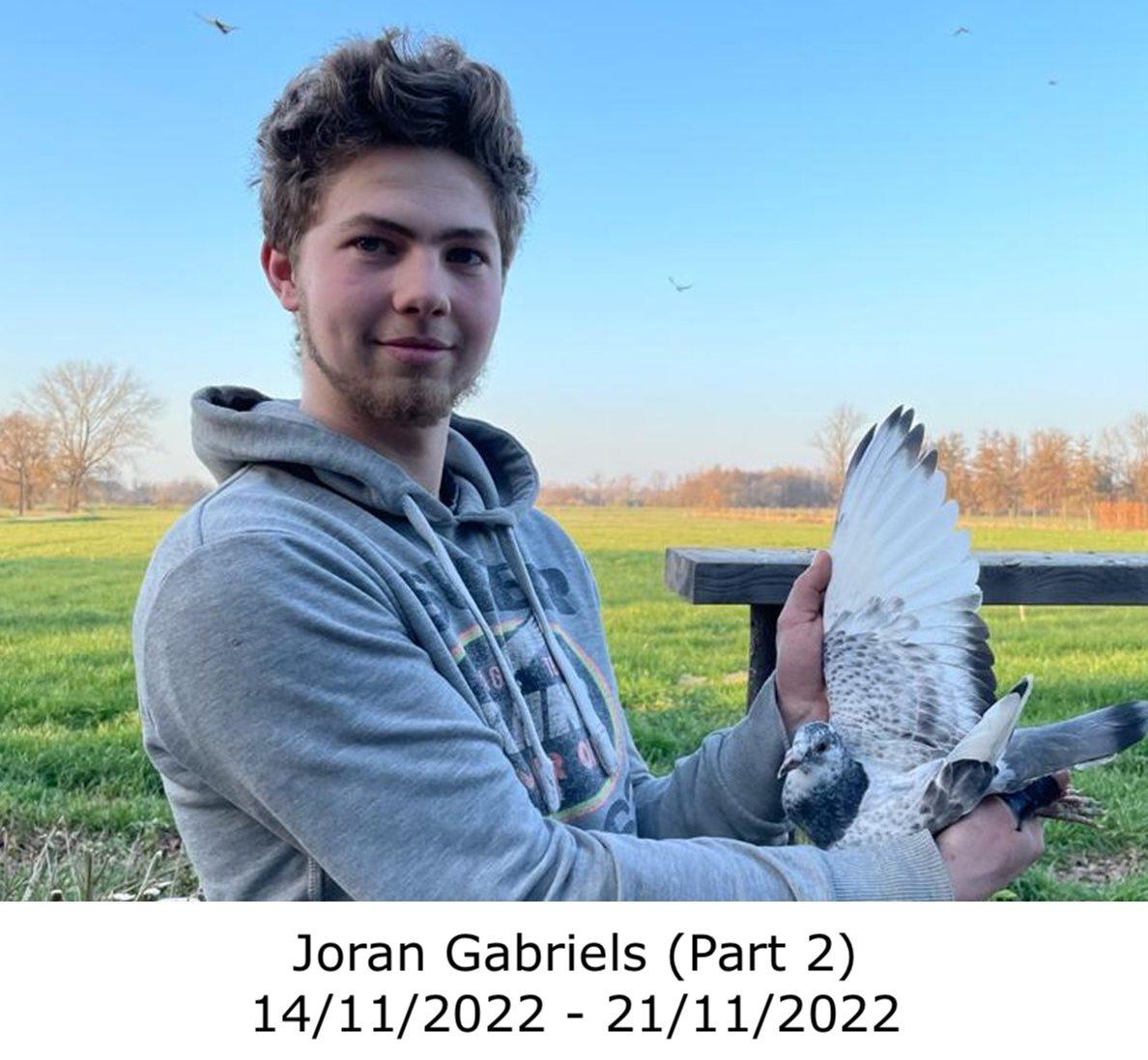
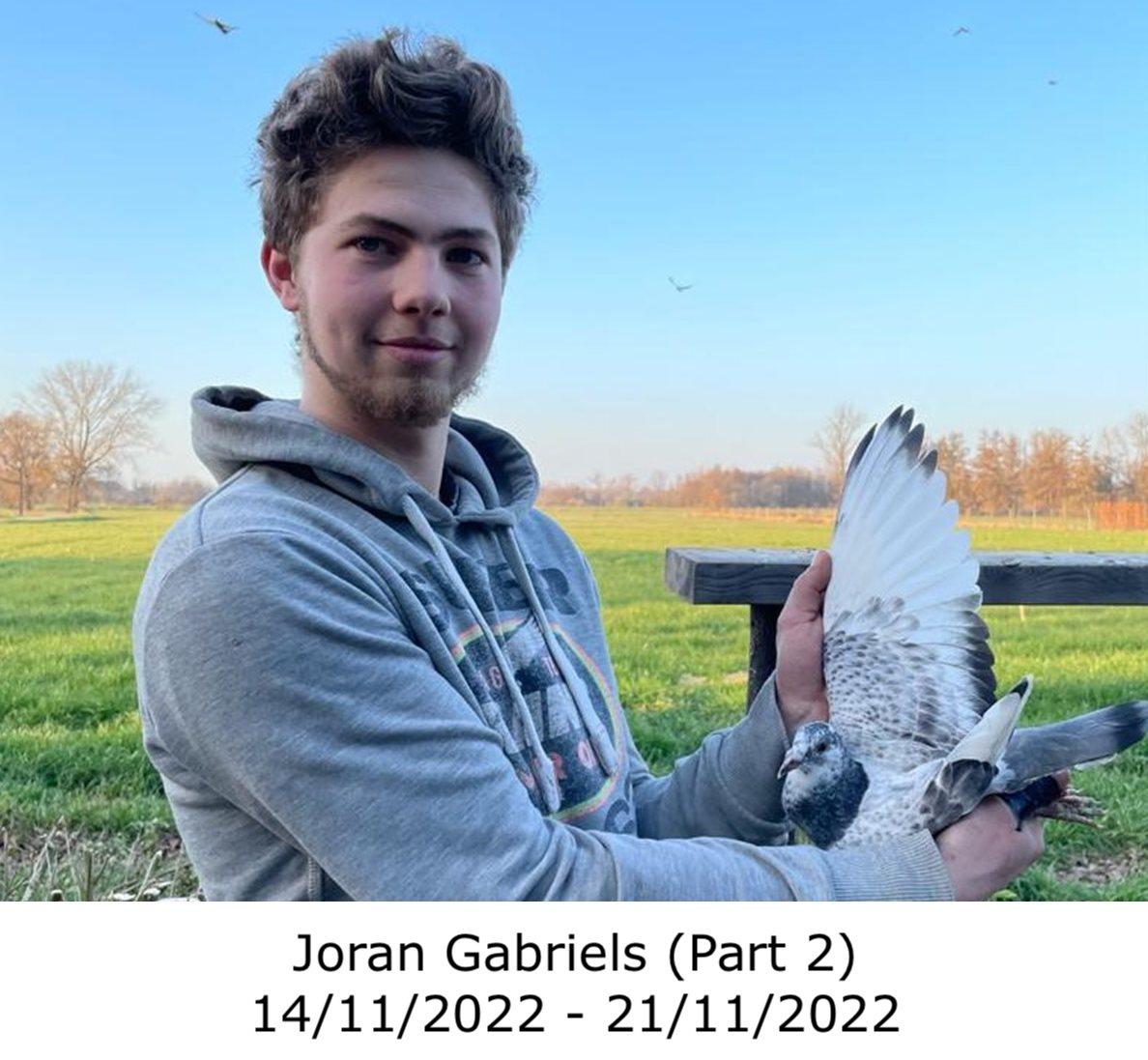
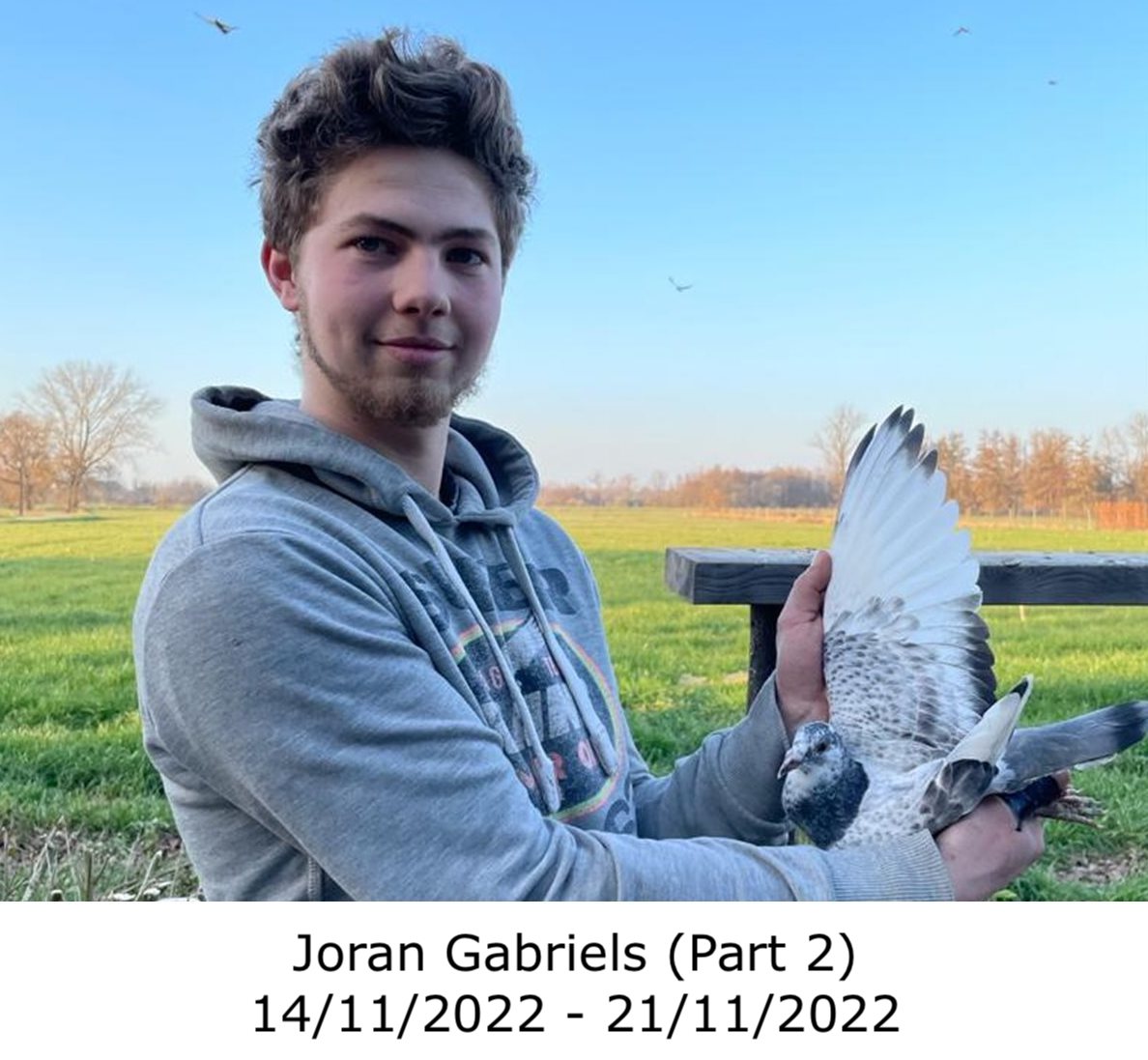
Top lofts like De Belser, Wouters, Engels, and grandmaster Gaston Van De Wouwer took this young man under their wings, resulting in a breeding loft that is a marvel!
Joran (20) caught the pigeon racing bug in 2014. Every Sunday, he would watch the pigeons racing for a neighbor. Starting in 2016, he independently began racing pigeons from a small garden shed. He combines his passion for the sport with a job as a carpenter at an interior company. The care of the colony is solely managed by Joran, as his parents have little interest in pigeon racing. However, he can always rely on an established name in the pigeon world for mentorship: Johan Van Herck, who also largely takes care of training the pigeons. Regarding pairing and basketing, Joran can count on the advice of grandmasters Gaston Van de Wouwer and Johan De Belser.
Loft composition and racing system
The colony consists of 30 pairs of breeding pigeons, 15 fostering pairs, 20 older and yearling females, and 80 young pigeons from the first round. The common thread throughout the loft is primarily the best lines from Gaston Van de Wouwer supplemented with pigeons from De Belser Johan, Engels Jules & Yves, Thys Nick & Roger, Van Hertem-Schuurmans, and Wouters Marcel.
For 2021, it was decided to race only with older and yearling females. The older females will be paired on March 15 and will be allowed to brood for 10 days before being put on widowhood. Since 2021, they have also joined forces with Johan Van Herck to race in tandem.
The young pigeon loft consists of a run measuring 13 meters by 2 meters with windbreak netting. Remarkably, the loft features a blue signaling light used to call the young pigeons inside. The light can be set for specific times and durations. Thus, it can also be programmed to light up as the pigeons return from training flights, letting them know they can enter when they come home. The young pigeons will be played on the sliding door, and some young females will be assigned a permanent (older) partner. Joran: “We have not yet decided on the darkness procedure, as it's difficult with the young pigeons in an open run. In 2022, a solution must be found to provide them with darkness.”
The young pigeons are kept in good shape from the beginning and are not allowed to sit on the ground. Once the young pigeons fly well around the loft, they only fly OR stay on the loft; if a pigeon lands on the roof ridge, it is chased off so it falls onto the landing board. After scaring the pigeon away several times, they typically all land directly on the landing board. Training progresses slowly and in small increments: 1km, 2km, 5km, 7km, 10km, 12km, 15km, 25km, 40km, 60km, and 110km. If necessary, a step backward is even taken.
Medical and nutrition
Vincent Schroeder and Trigenio are consulted regularly. An annual check-up is performed with Vincent, and the protocols are reviewed. In 2021, a fecal examination will take place every 3 weeks. If a pigeon gets injured or suddenly falls ill, Joran goes to a veterinarian close to home. Checks are only conducted when something abnormal occurs or there is suspicion of an illness or condition.
For nutrition, various mixtures from different brands are blended. By-products are mainly sourced from Vincent Schroeder and used sparingly, as, according to Joran, nothing beats strong natural resistance.
For breeding, a small routine check is done. Two months before breeding, all pigeons are dewormed, and for 10 days before pairing, wheat germ oil is added to the feed along with a bit more hemp seed. During breeding, egg food, rearing pellets, seed treats, and tovo are provided daily. In preparation for the racing season, the older pigeons are paired on March 15 and allowed to brood for 10 days. From stocking to brooding, training is done: 1km, 5km, 7km, 10km, 20km, 40km, 60km, and race from Quiévrain.
Ambition knows no bounds
Joran: “I started with the sprint races, and soon I got to know Gaston Van De Wouwer, and I switched to the middle distance. Now the breeding loft consists solely of pigeons intended for the small middle distance, and in 2021 all young birds will be raced on the nationals. My great ambition is to possibly become a professional and achieve top results from the middle distance to Barcelona. As a young enthusiast, it’s not easy to get started. You often hear responses like ‘You don’t know what you’re getting into...’, ‘You won’t last long’, or ‘Snot-nose, do you know anything about pigeons?’ These reactions can sometimes hit hard. Therefore, I would like to spread this message to the ‘older generation’: Give young enthusiasts the chance to learn how to handle pigeons and take them under your wing. Teach them the tricks of the trade. This hobby requires a lot of time and responsibility, but you get so much in return!