
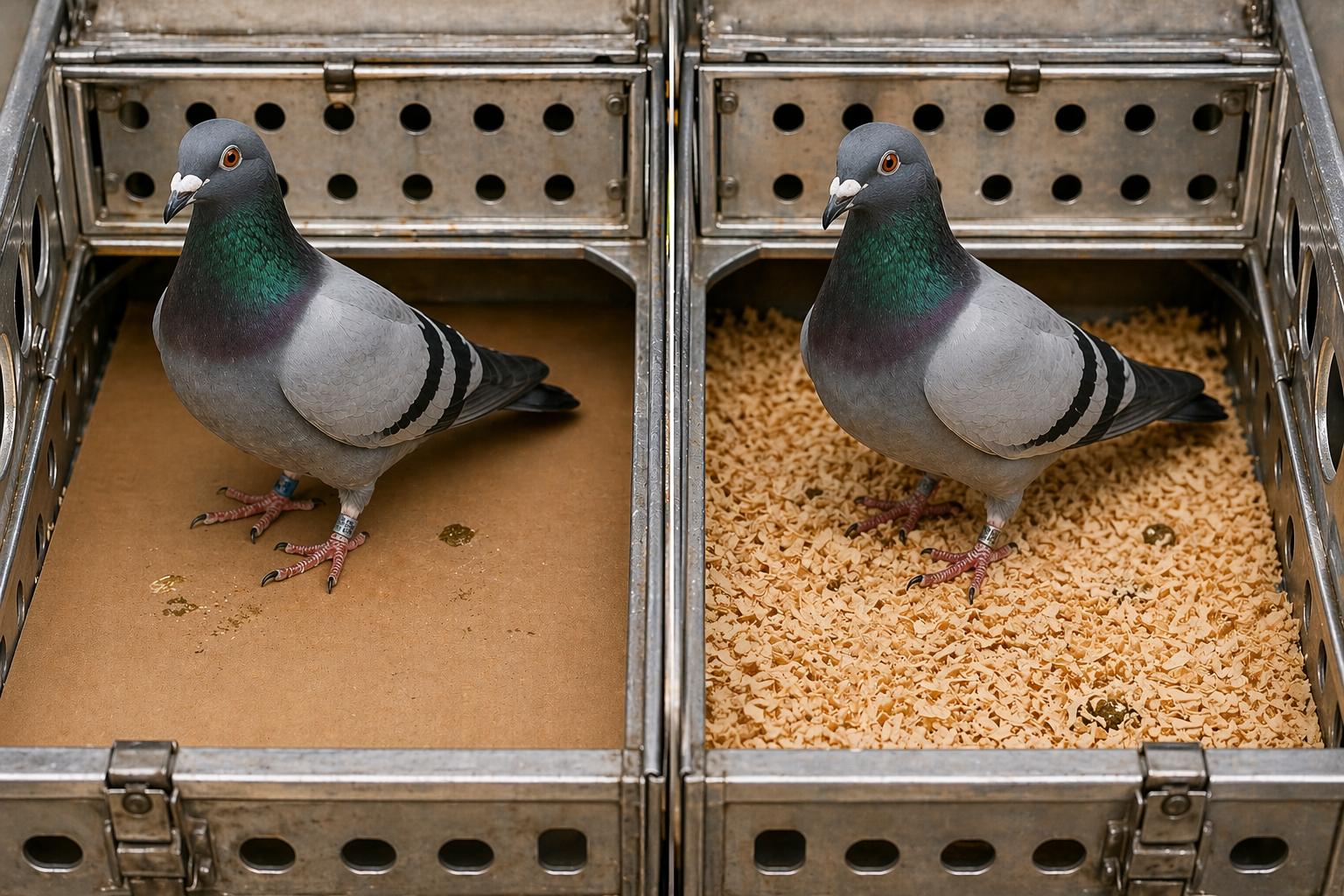
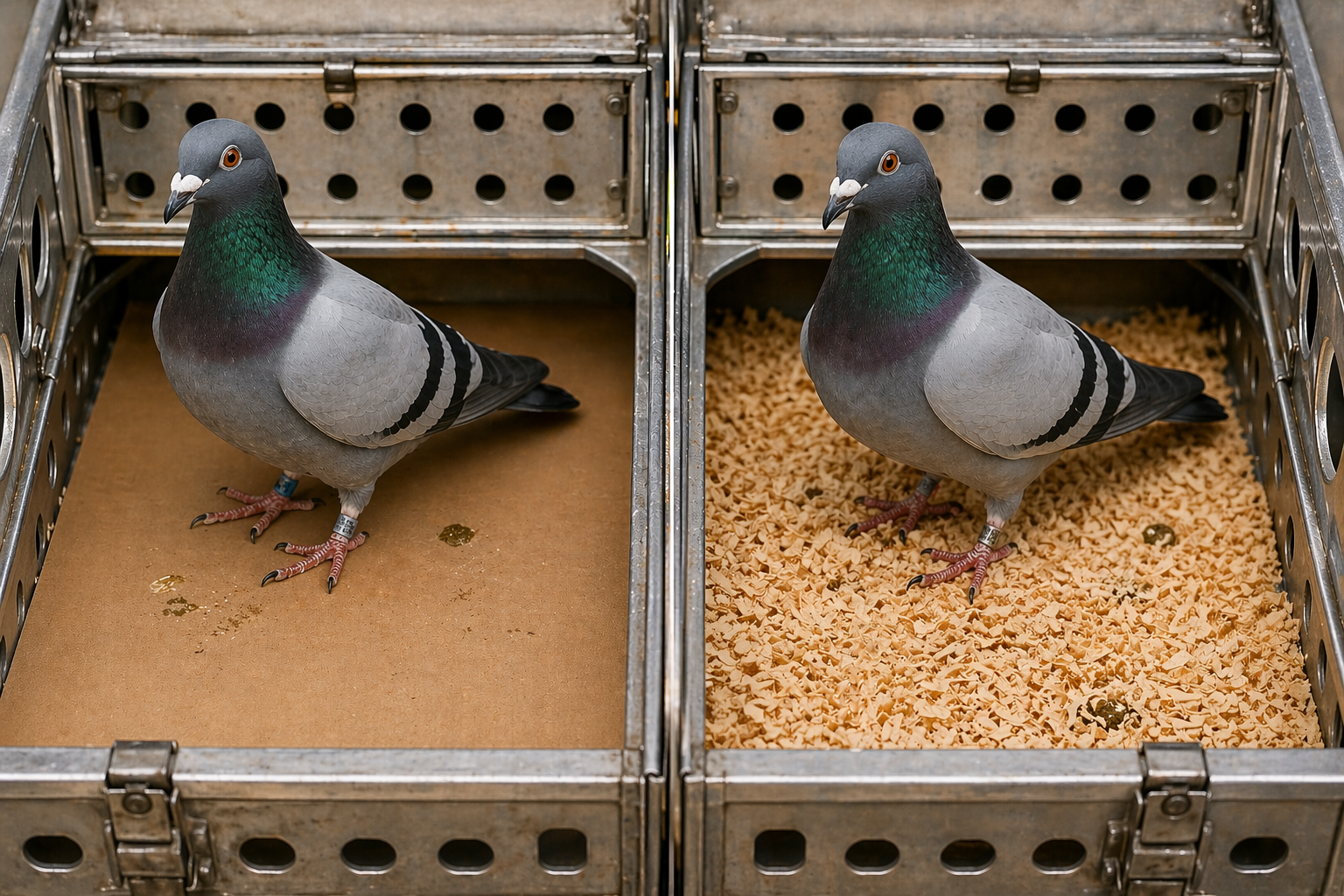
The debate surrounding the use of cardboard or wood shavings as bedding in transport crates continues to stir strong opinions. While some transporters advocate switching to cardboard for hygienic and practical reasons, several shipping services and fanciers clearly prefer to maintain the use of wood shavings.
Transporters advocate cardboard
According to transporters such as Bauwens and Lathouwers, the use of adapted cardboard can play an important role in improving hygiene in transport crates. Studies, they say, show that pathogens such as salmonella can remain active for months in traditional bedding. The use of cardboard could help break this contamination cycle while also making crate cleaning easier and reducing dust exposure for those responsible for maintenance.
These arguments mean that the proposal to apply cardboard more widely is currently being actively discussed within several transport organizations.
Critical reactions from East Flanders
However, there is also considerable criticism from the field. In particular, fanciers from East Flanders refer to years of practical experience with transport using cardboard without wood shavings, including during provincial races in the greater middle-distance category organized by FVOVV-OVV.
Under strong pressure from the majority of East Flemish fanciers, aluminium transport crates were replaced several years ago by plastic crates. Pigeons returned home with dried droppings stuck to their legs, tails and wings, some even up to their heads. The crates returned to the clubs spoke for themselves: soiled with droppings on all sides and the cardboard on the bottom reduced to a few soaked fragments stubbornly sticking to the crates…
In reality, however, it was not specifically the crates themselves that formed the problem, but rather the bedding used: cardboard without wood shavings. At that time, shavings were not allowed because they would clog the drinking system.
Among the problems reported were:
pigeons returning home with heavily soiled legs
increased contact with droppings during transport
higher risk of coccidiosis
feed becoming contaminated more quickly
need for additional medical treatments
mould formation under the cardboard when reused
According to the fanciers involved, the situation improved significantly once a thin layer of wood shavings was again used on top of the cardboard.
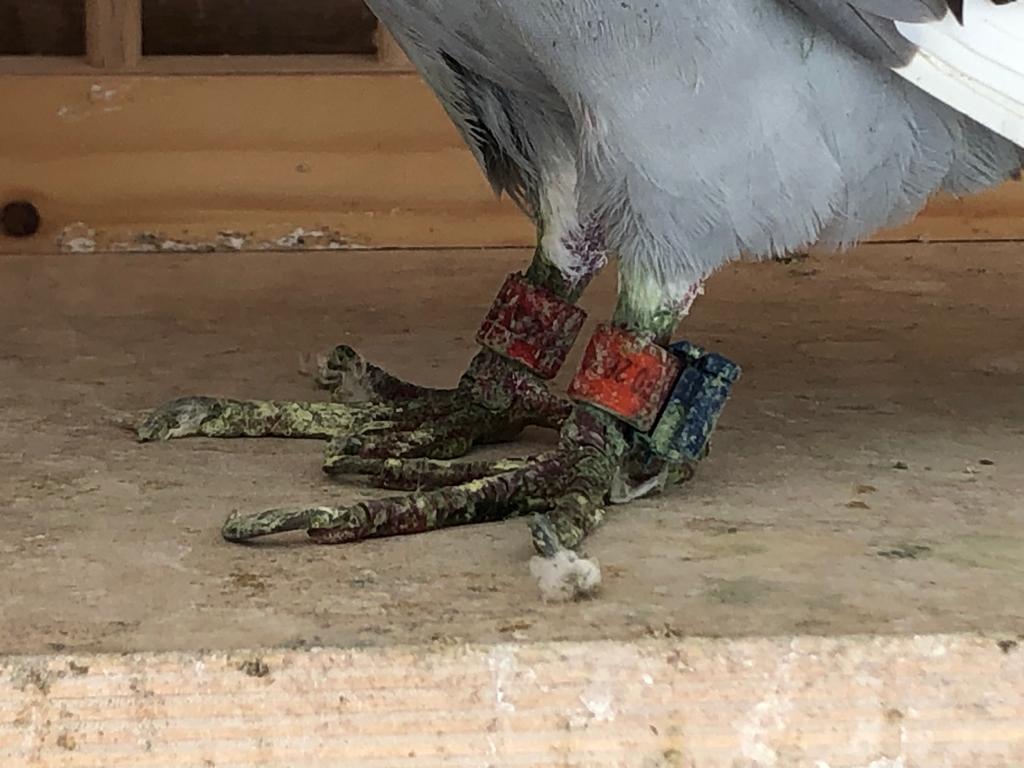
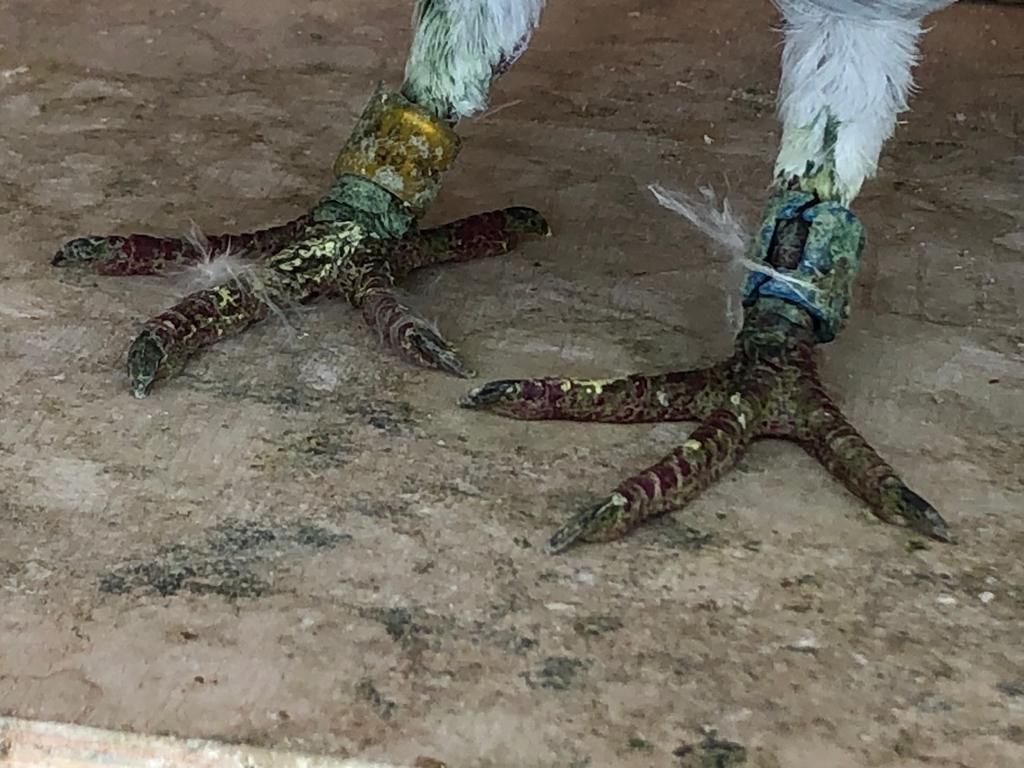
Above: The result of transport on cardboard without wood shavings. (Photos: Pitts archive 2021)
Supervisors give advice
Inquiries among several supervisors from other transport services show that the use of wood shavings is generally preferred over cardboard. The crates remain much drier because the shavings absorb moisture from droppings, and feeding is considerably more hygienic.
It is important to mention, however, that too many shavings should not be spread in the crates, as this could indeed result in large quantities ending up in the drinking troughs. Some clubs also simply throw additional shavings on top without removing the dirty ones first, which is obviously not the intention. Shavings that are too small or too light, or other (dusty) types of bedding, are also considered undesirable. According to them, a thin layer of coarse wood shavings on top of the mat is sufficient.
Dutch fanciers call for maintaining wood shavings
Similar signals are also coming from the Netherlands. Within the NPO structures, there is clear support for maintaining the use of wood shavings in transport crates.
According to several long-distance specialists, wood shavings remain important for:
better hygiene during transport
less contamination of the legs
fewer medical problems during the season
better condition retention when pigeons stay multiple nights in the crates
They point out that transport on cardboard without bedding can become particularly problematic during races where pigeons spend several nights in the crates and are fed inside them.
Limburgse Verzending continues to choose wood shavings
Limburgse Verzending clearly aligns itself with those who support maintaining wood shavings. In their agreement with affiliated clubs, it is explicitly stated that cardboard or flax residues may not be used in the aluminium crates.
According to the transport service, the use of steamed white pine wood shavings remains a fixed procedure within their transport policy, particularly in relation to animal welfare and crate maintenance requirements.
One solution for all races seems difficult
The discussion mainly shows that there is no single solution that is ideal for every situation.
Practical experience indicates that:
cardboard can offer advantages for short transport duration
wood shavings clearly show advantages when pigeons stay multiple nights in the crates
a combination of cardboard with a thin layer of wood shavings may form a workable compromise
The ongoing studies into transport methods are therefore generally welcomed positively, but at the same time there is a clear request to always test new proposals against the extensive practical experience within our sport.
The coming period will show whether a broadly supported consensus can emerge in Belgium and the Netherlands regarding the best solution for transporting our racing pigeons.