

Amino Acids: Essential Building Blocks for Healthy and Strong Pigeons
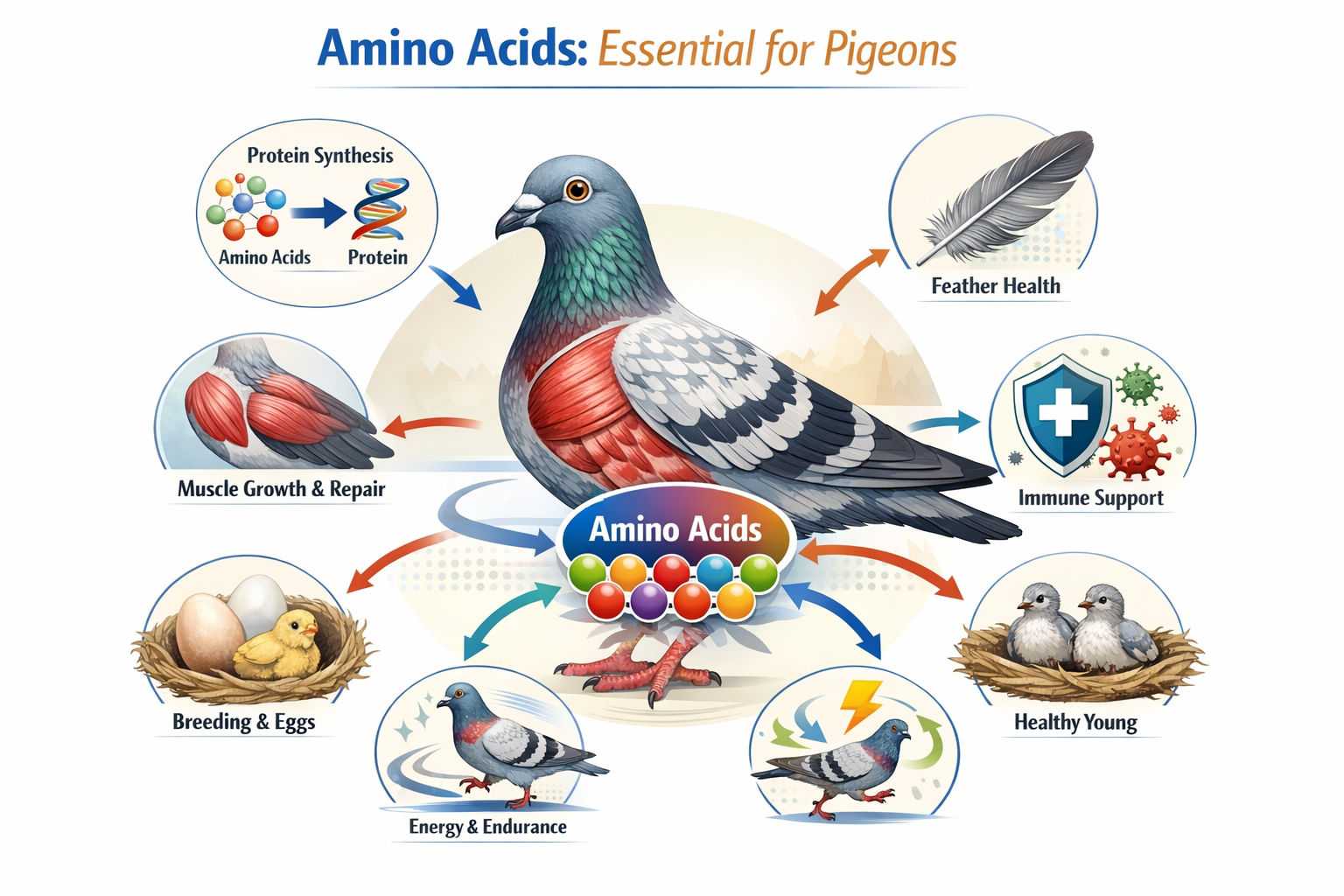
Proper nutrition forms the foundation of every healthy and high-performing pigeon. Within this nutrition, amino acids play a particularly important role. Amino acids are the building blocks of proteins, and proteins are essential for many processes in the body. They contribute to muscle development, feather growth, recovery after exertion, and the support of the immune system. Without sufficient amino acids, the pigeon’s body cannot produce new proteins, which negatively affects growth, recovery, and overall condition.
Like other birds, pigeons require a balanced diet to function optimally. Amino acids obtained from the diet are used by the body to produce specific proteins needed for various physiological processes. These proteins support muscle development, cellular maintenance, and the overall vitality of the pigeon.
Important for Feathers and Molting
One of the most visible examples of the importance of amino acids can be seen in the plumage. Feathers consist largely of keratin, a strong protein built from various amino acids. In particular, cysteine, methionine, and arginine play an important role in feather formation and strength.
During the molting period, when the entire plumage is renewed, the need for amino acids increases significantly. Adequate intake supports the growth of strong, flexible feathers and ensures high feather quality. This is important not only for the appearance of the pigeon but also for aerodynamics and performance during the racing season.
Muscle Development and Recovery
For racing pigeons that train intensively or participate in competitions, amino acids are essential for the development and recovery of flight muscles. During a race, the muscles are heavily stressed and small damage occurs in the muscle fibers. Amino acids help repair and rebuild these tissues.
The so-called branched-chain amino acids — leucine, isoleucine, and valine — play an important role in this process. They support recovery after exertion, promote muscle development, and help pigeons regain their condition more quickly after demanding races. A proper amino acid supply therefore contributes to improved endurance and more stable performance throughout the season.
Support for the Immune System
In addition to their role in muscles and feathers, amino acids also support the immune system. Certain amino acids, such as glutamine and arginine, help strengthen the body's natural defense mechanisms and assist pigeons in resisting infections and diseases.
This is particularly important during stressful periods such as transport, racing, breeding, or molting. In these situations, an optimal amino acid supply can help maintain health and condition.
Importance During Breeding
Amino acids are also important during the breeding season. Adequate protein intake, made possible by essential amino acids, supports egg production, fertility, and the development of healthy young pigeons. A balanced amino acid supply helps ensure that young birds grow up strong and vital.
Essential Amino Acids
For optimal nutrition, pigeons must receive all essential amino acids through their diet, as the body cannot produce them itself. The most important essential amino acids for pigeons are:
histidine
isoleucine
leucine
lysine
methionine
phenylalanine
threonine
tryptophan
valine
If one of these amino acids is lacking, the body cannot properly produce certain proteins.
Supplementation
Although a quality pigeon feed mixture already contains protein sources such as peas, beans, or soybeans, the amino acid profile of the feed is not always perfectly balanced. For this reason, many pigeon fanciers use amino acid supplements, administered through drinking water or over the feed, especially during periods of increased demand.
One example is Aminotonic from Duivensport België (DSB). This supplement contains a complete spectrum of amino acids and is particularly suitable for recovery after demanding races. Many fanciers observe that pigeons regain their body condition quickly and that the breast muscle develops a healthy pink-red color, both signs that the pigeon’s metabolism is being stimulated. It can also increase the pigeons’ willingness to train.
In practice, it is often administered immediately after the pigeons return from a race, usually for about a day and a half, to support the recovery process. It is also very useful for pigeons that have gone extremely deep during a difficult race and need extra recovery time. In such cases, the results are often remarkably visible.
Thanks to the addition of vitamins A, D3, E and several essential B vitamins, this type of supplement also offers added value during the breeding season and while young pigeons are growing. It is a formula that has been known for many years in pigeon sport and is still used by many successful champions today.
In modern pigeon sport, increasing attention is paid to nutrition, recovery, and overall condition. Amino acids therefore represent an important tool to keep pigeons healthy, strong, and competitive throughout the season.